Latest: Buy the new edition of Shakespeare's Heartbeat

Flute theatre workshop taking place in Ohio

Hunter Heartbeat Courses

A unique opportunity to learn the skills and techniques of the Hunter Heartbeat Method, with creator Kelly Hunter MBE. A learning opportunity with direct engagement for performers, teachers, theatre practitioners, parents and therapists.

"The course is superbly structured with meticulous work and planning from both the Shakespeare and autism sides. It had a profound effect on me creatively, physically and emotionally."

Caroline, London. August 2025
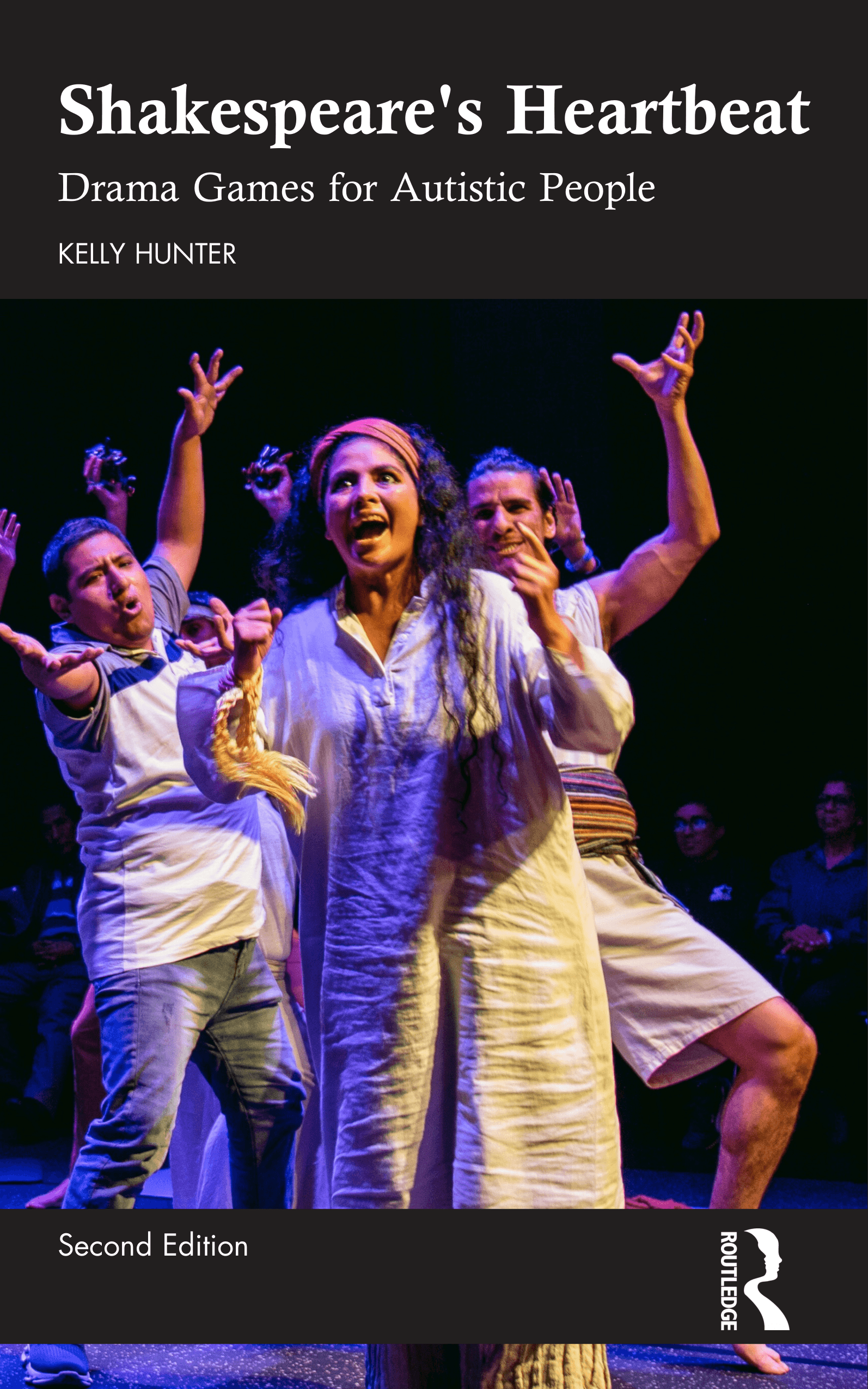
Shakespeare's heartbeat (second edition) book cover

" There is no more effective way to teach social skills, promote inclusion, and awaken the soul than the Hunter Heartbeat method. The program changed my life, and ever since I started teaching it, it has changed the lives of the hundreds of individuals who have experienced the awakening it provides. "

Ben Raanan, Artistic Director, Phamaly Theatre Denver Colorado

Shakespeare's Heartbeat - Buy Now

Shakespeare's Heartbeat (Second Edition)
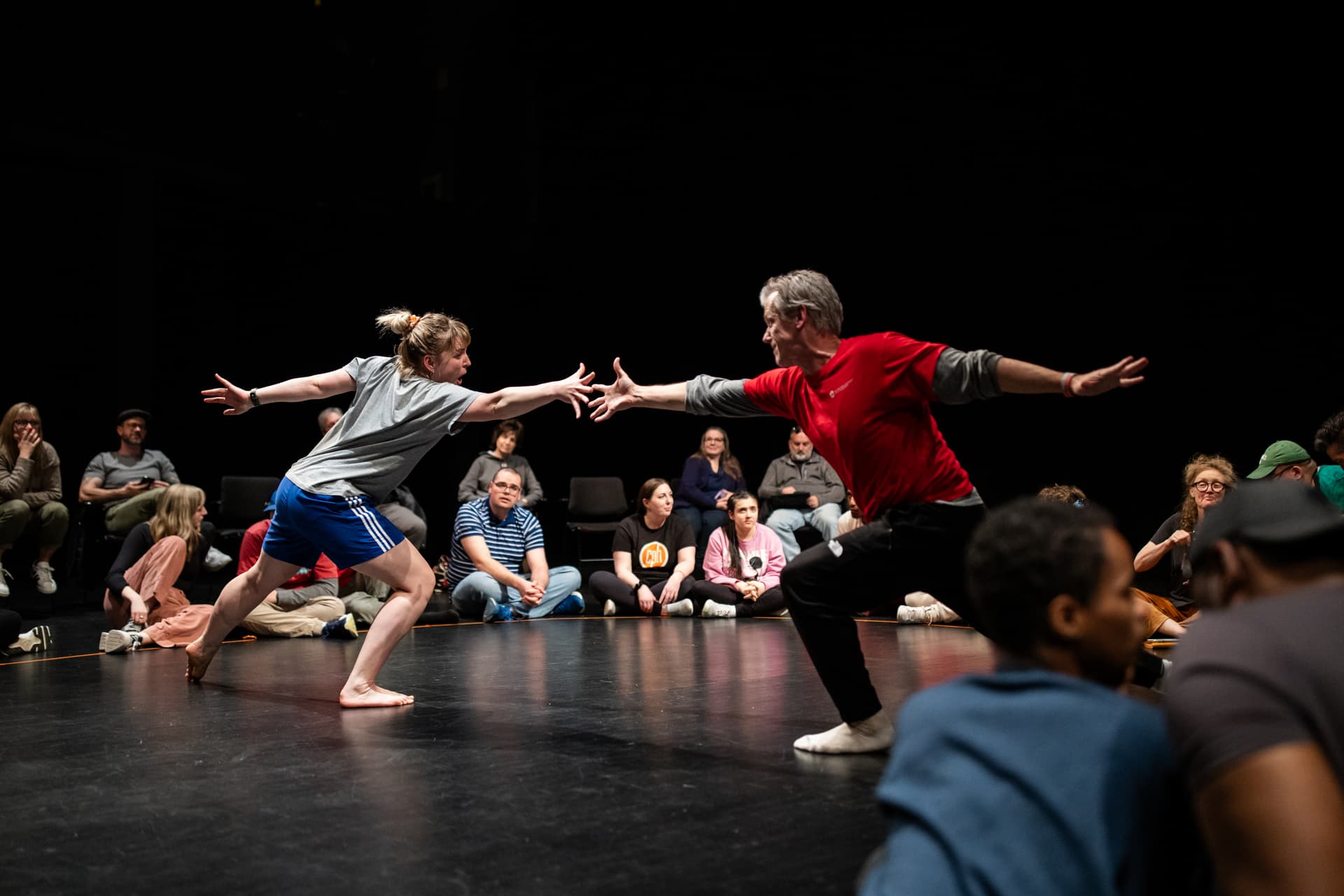
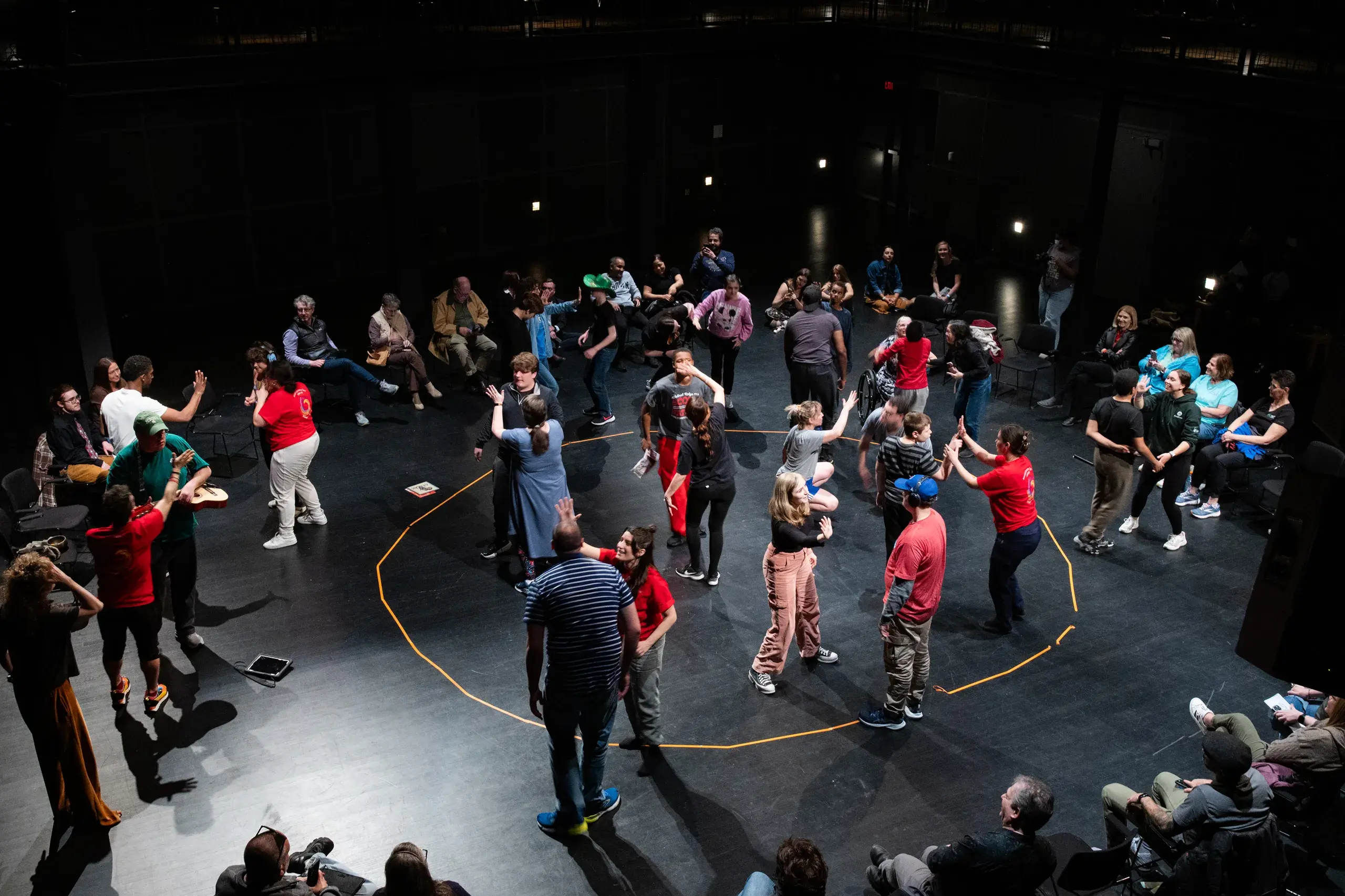
Two performers, a woman in blue shorts and grey t-shirt and a man in a red t-shirt and black trousers, reach toward each other mid-movement in an expressive, dynamic pose. They are surrounded by an audience seated on the floor in a circle, closely watching the interactive performance in an intimate, inclusive theatre setting.

The Hunter Heartbeat Method is a series of sensory drama games, which allow autistic people to share how it feels to be alive and celebrate their identity. Dr Kelly Hunter MBE has created this award-winning methodology for and with autistic people across the world, over the last twenty-five years. These are games of humanity that need only the human voice and body and another person to play with. They are derived from Shakespeare’s poetic exploration of the loving eye and seeing mind; allowing everyone involved to express how it feels to be alive. The games form the basis of Flute Theatre’s specialised productions for autistic people and those displaced by war.

"A joy bomb!"

Kevin Rich, University of Boulder, Colorado

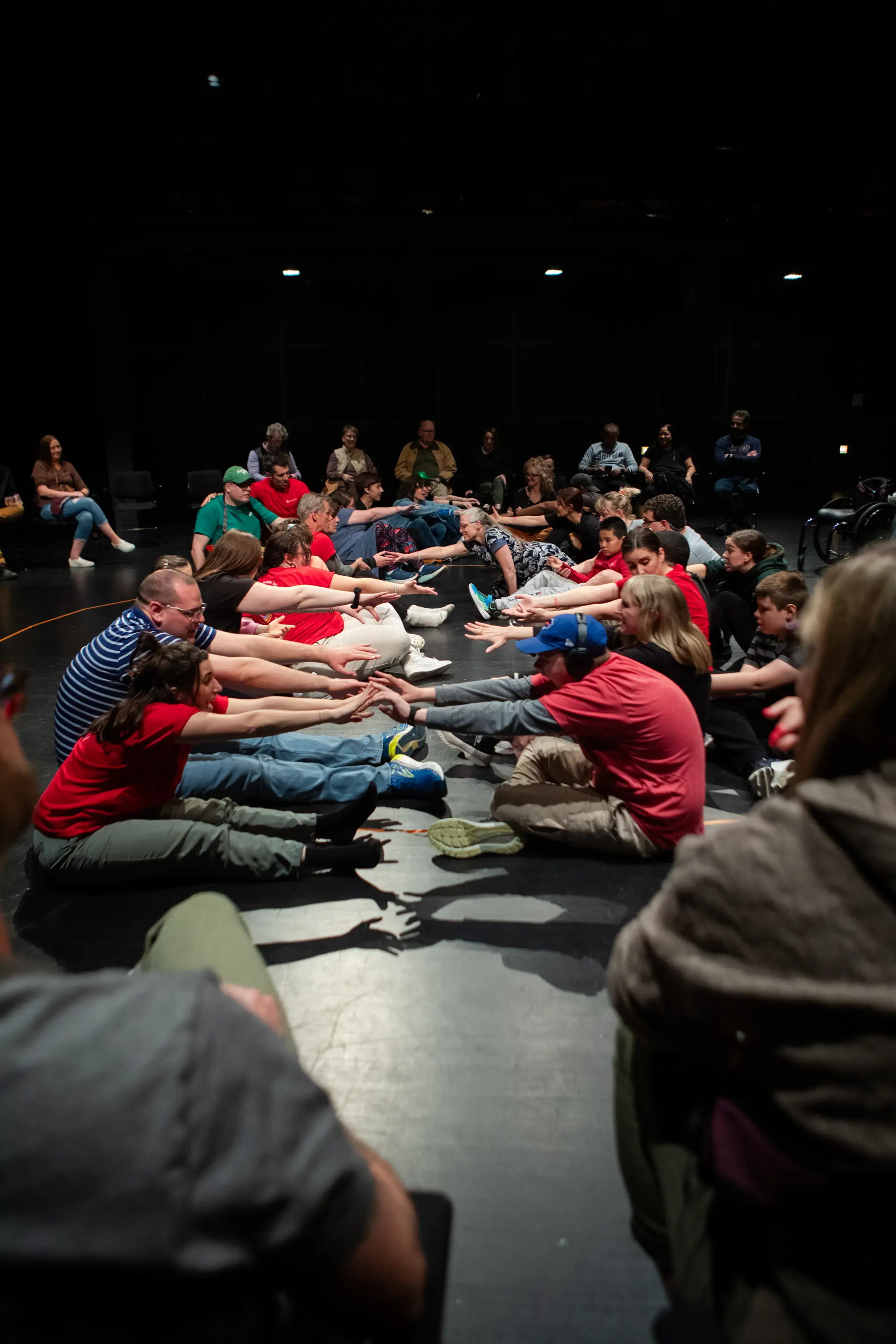
Hunter Heartbeat course in Ohio, 2025

A group of autistic participants, families, and facilitators sitting in a large circle on stage, reaching their arms forward together during an interactive Flute Theatre workshop at the Wexner Center for the Arts.

I still remember when Kelly told us about the rhythm in Shakespeare’s plays and how it had a lot to do with the heartbeat. At first, it seemed warming to me, but I guess I didn’t fully understand the meaning of it, until we started rehearsing The Tempest. As days went by, I realised that every time we said Hola we were just synchronising our hearts to listen and connect with everyone. After that everything we built came naturally, intuitively, easily, as ego was slowly being shadowed by active listening and bonding. I feel everything we did was generating spaces made of different people where each one of us was explaining and belonging to Shakespeare’s play, all of us were Shakespeare, the ones in the spotlight were one with the ones in the margins.

Theatre should be able to be played at any place, even in a small office with bright white lights, an underground gym, a sunny road, or in a dark box with spotlights and chairs. And, quoting Kelly, at places where theatre seems not to have sense to be played is where it should be played the most. No one should be excluded from theatre, as no one should be excluded from life.

This week we didn’t do therapy, we did theatre.

We part from a huge structure so that we can break it and be able to improvise and let ourselves be surprised constantly. And that’s how it was. Every day happened something unexpected; every day we met different people and worked in different spaces; everyday we made different Tempests.

I wanted to share one of the days from my point of view:

Suddenly you meet a child that stays in the margins and eats floor rubbish, and you don’t know why but he grabbed your hand when he was getting into the space, though now he seems not interested at all in anything you do. He traces the floor lines with his finger.

And when you do doyoyoyoing, he laughs.

He traces the floor lines with his finger.

And when you sing, he puts his hands in your neck.

He traces the floor lines with his finger.

And when you tip with him, he smiles.

And you decide to walk with him to the centre of the room to do the tipping with Aleix and Alfons. And again, he seems not interested. Everyone stops paying attention to him, and it is in this precise instant that his repetitive movement changes and he goes straight to the centre. Maybe he just needed 5 more seconds, maybe no one looking at him, or maybe it all was a mere coincidence, but he ended up doing the tipping in the middle of the space.

Once we’ve said our goodbyes he went back to the margins and tracing the floor lines, and after some time I went to talk to other participants. Suddenly, I felt a small finger caressing my foot. It was him tracing my toes with his hand. Again, maybe it all was a mere coincidence, but I felt like we were saying goodbye.

Maybe we didn’t get it all, but all that time we were knowing each other, perhaps inside a huge misunderstanding, but I felt that inside this misunderstanding we were together.

There’s something natural, intuitive, easy in everything we did; it was just being present and sharing; rehearse with opened senses and without taking anything for granted. Life should be it: natural, intuitive, easy; with opened senses and without taking anything for granted.

Clara Conangla, actor. March 2026

Catalan families at Arsènic, Espai de Creació in Granollers, 2025. A joyful group of autistic children, their families, and Flute Theatre facilitators pose together outdoors against a mosaic wall, celebrating an inclusive Shakespeare workshop experience in Catalunya.

"This was the single most impactful and important educational workshop that I have ever experienced as an educator. Every educator should learn the magic of the Hunter Heartbeat Method. Thank you."

Archer DCPA Denver Colorado

May 2025

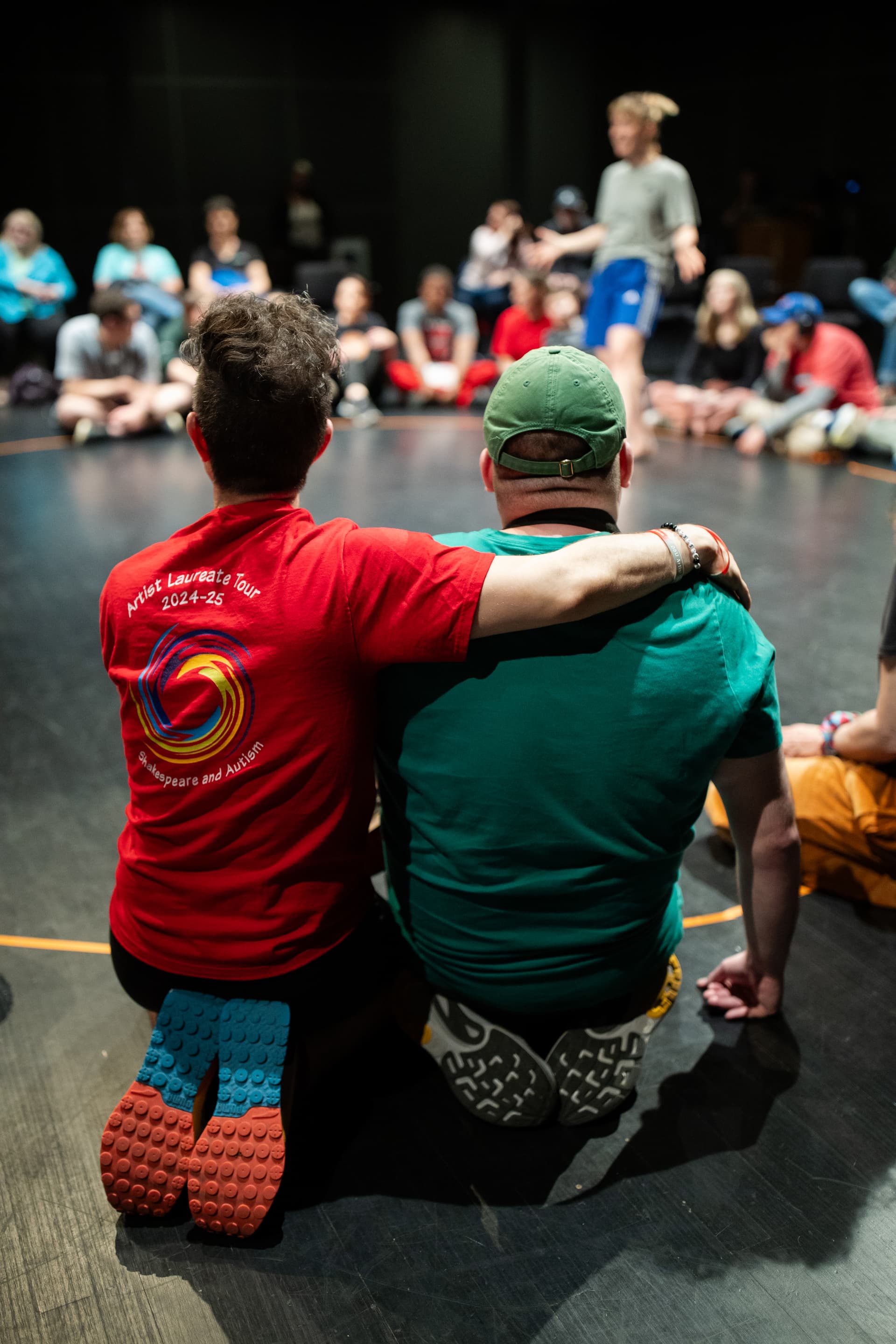
Shakespeare and Autism 2025 workshop participants seated in a circle, with one person’s arm around another in a moment of connection and inclusion.

"I am simply blown away by the magic in the room. At the talkback, we discussed autism and employment and I was woken up to my automatic thinking that employment is an ultimate goal...and it's not! Unemployed autistic adults are still equally valuable. I also never considered that theatre is not always a tool for a certain result. "

Kaylie

Ohio State University Columbus Ohio (May 2025)

Shakespeare and Autism 2025 workshop participants seated in a circle

Course Details
Course Locations

Kelly Hunter will be running a course with Chicago Children's Theatre in February 2026

2025

San Francisco

Columbus Ohio

Denver, Colorado

Barcelona, Spain

Riverside Studios, London

The Shakespeare Birthplace Trust

The Urban Theatre Project, Kolkata

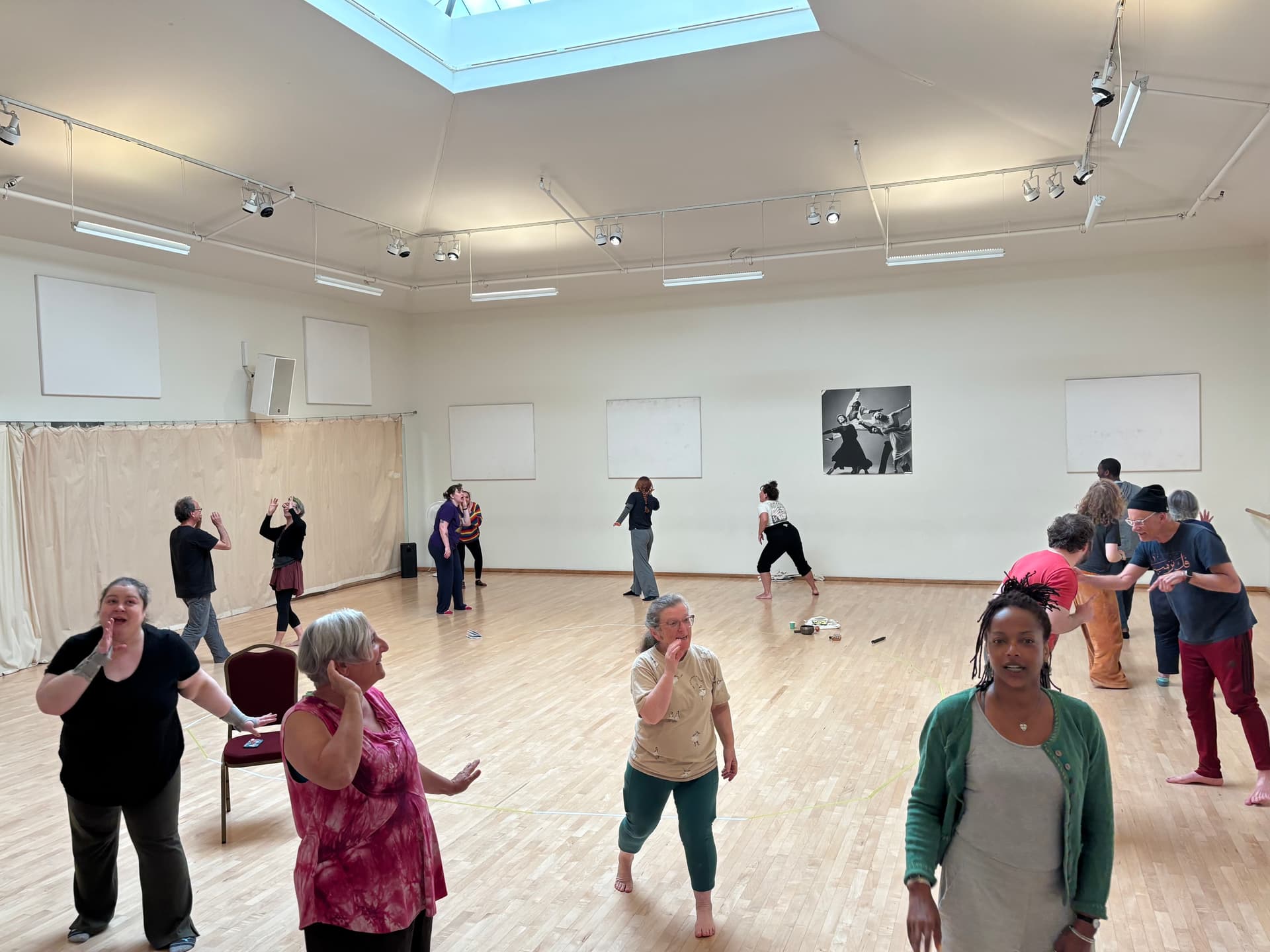
Inclusive theatre workshop with a diverse group of participants engaging in movement and communication exercises in a bright, open studio space in San Francisco, April 2025.

"This work is life changing! After reading Kelly's book, it was SO important to work with her in person to hear the musicality and rhythm of the work first hand. The games in the book are the favourites of my students. Thank you for being here!"

Kendle

DCPA Denver Colorado (2025)

Inclusive theatre workshop with actors in San Francisco, April 2025
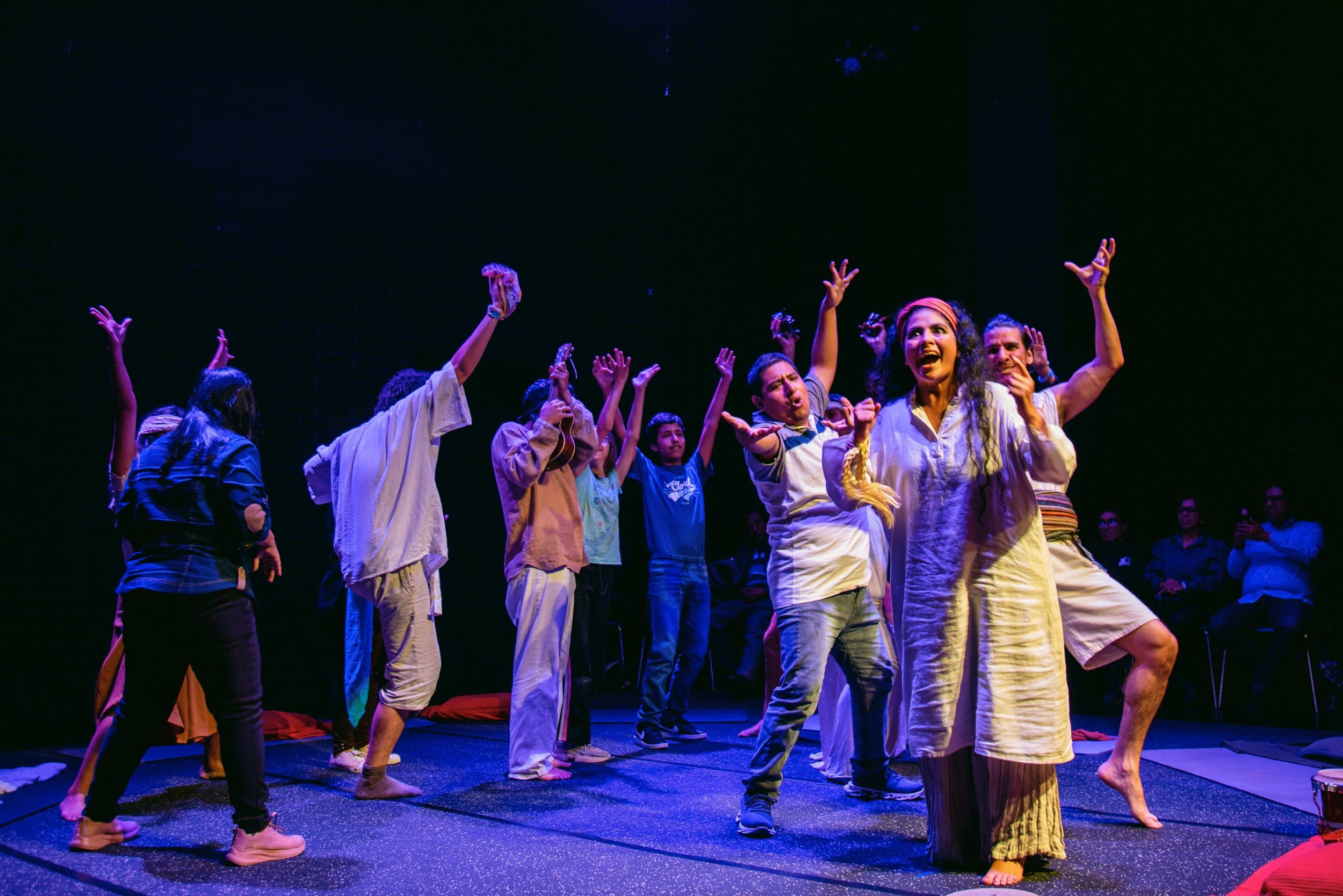
A diverse group of performers energetically engage in a live Flute Theatre performance, using expressive gestures and movement on a dimly lit stage. The actors wear casual, comfortable clothing in natural tones, creating an inclusive and accessible environment tailored for autistic individuals. This performance, inspired by Shakespeare and adapted using the Hunter Heartbeat Method, highlights Flute Theatre’s commitment to neurodiverse storytelling. Audience members can be seen watching with interest in the background. Flute Theatre also offers training and courses for actors, educators, applied theatre students, and families to support autism-friendly performance practices.

Support our Theatre

Huge thanks to Arts Council England and Bristol Myers Squibb for their invaluable support during Spring 2026.

Funding for the arts is currently said to be at a ‘terminal decline’ but we will continue to create our life changing opportunities whatever the challenges.  Please help us continue with a one off donation or a monthly subscription. Your donations go directly toward our performances with marginalised people and always will.

Donate