
King Lear for autistic adults
I sat mesmerised by Flute's 'King Lear' - in some ways their most ambitious production yet - for autistic adults with a such a vast range of needs, challenges and abilities you wouldn't find them working together in any other setting I can think of.
There's always still an element of terror for me when Tim is involved in anything with an audience and I am on eggshells waiting for him to blurt something random or inappropriate, run away or just refuse to take part.
The point of Flute is, that is the whole point. They know our beloved young people so well, they have worked with them intimately over days and weeks (and many years in Tim's case), they absorb, welcome, celebrate and create magic with whatever (and I mean whatever) they bring. The result is that the participants experience joy, trust, fun and kindness they often don't find anywhere else. Nothing says this more poignantly than the 'catching game' (still my favourite) when one by one, each participant closes their eyes and, incredibly, falls forward to the floor smiling, to be caught by welcoming arms. It feels like Flute has always been there to catch Tim and warmly embrace him when he's had no one else but us.
When Josh said 'thy life's a miracle' to each participant in turn, on his knees in a hushed room, it could not have felt more true or more heartfelt.
Francesca Harden
King Lear films (April 2026)
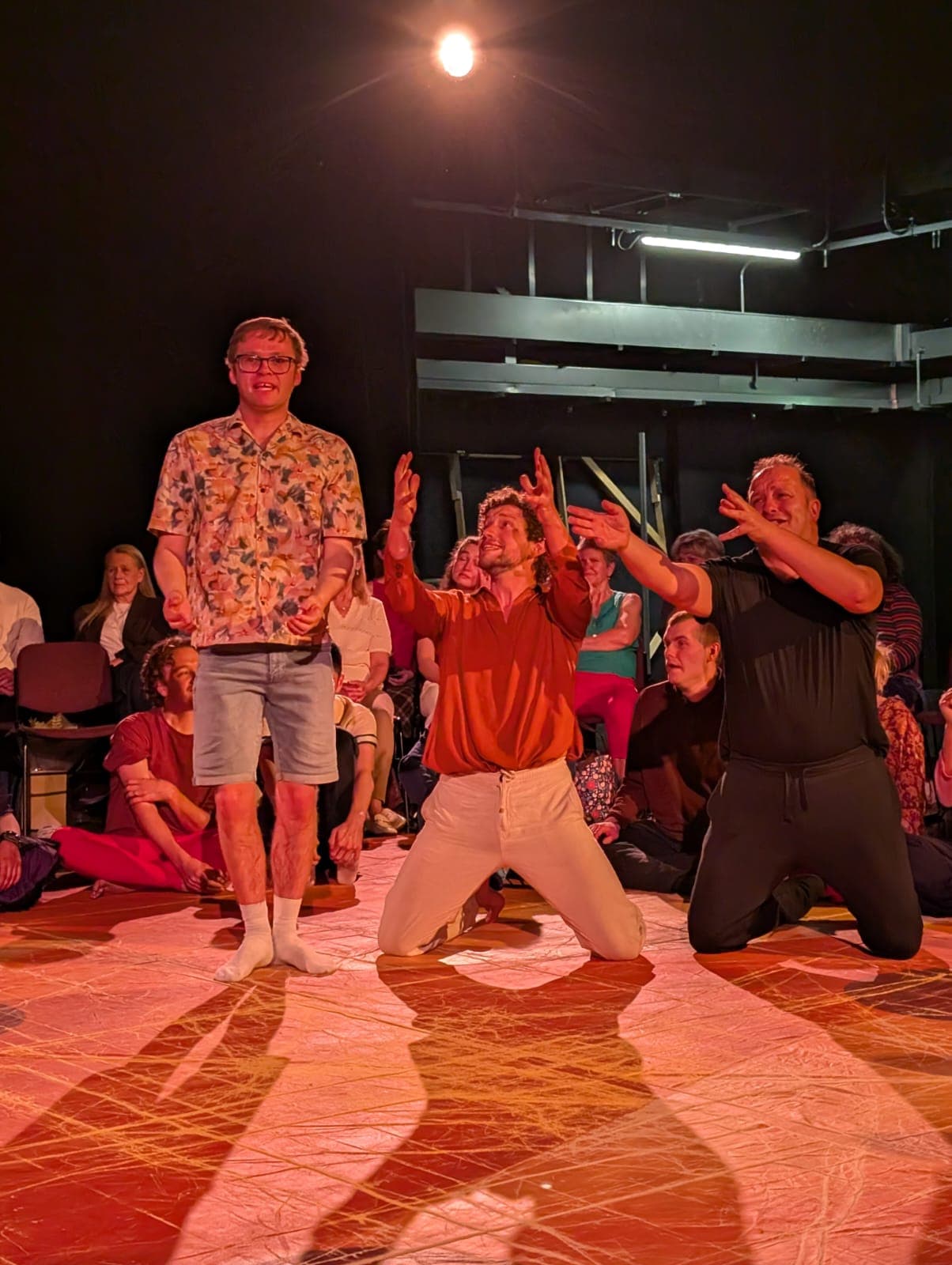
King Lear with autistic adults, Full length film
God's Spies
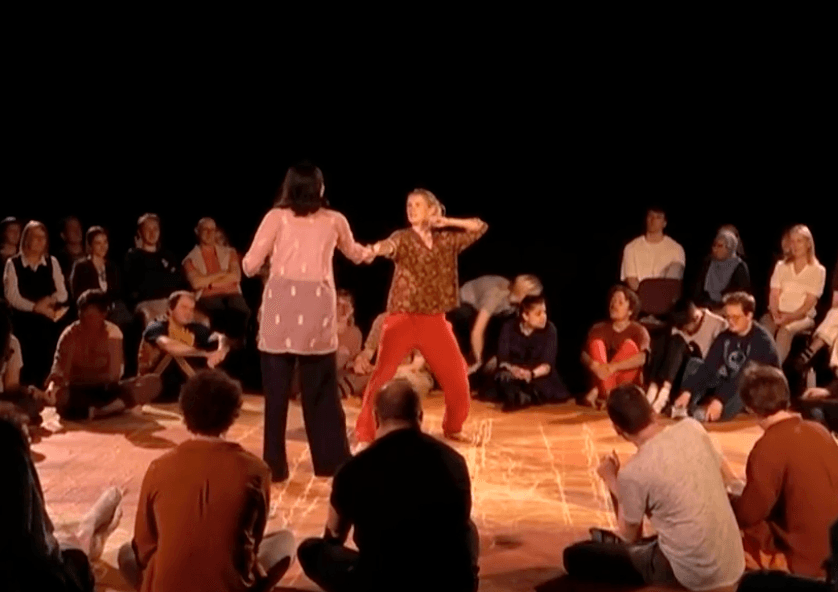
Blow winds and crack your cheeks
My 23 year old son Ollie has been coming to Flute Theatre for over ten years and we were delighted to be invited to take part in the creative process of a new production of King Lear.
He attended 7 sessions including the final performance, taking time out during his penultimate year in the education system. Ollie is barely verbal, unable to hold a conversation or express emotion. He regards Kelly, the company of actors, the autistic participants and their families as his friends. Throughout each session he expressed himself energetically and enthusiastically. The joy on his face and reaction as he manages eventually to speak single words is akin to a footballer scoring the winning goal. He takes everything in, and much of the acting and dialogue is remembered coming out, weeks or even years later, only once perfected.
The final creative performance was watched by over 80 family, friends and professionals and I reflected that, within a 2 hour performance, the whole spectrum of autism had been showcased in a way that an audience of any background could understand. All this whilst creating fun and joy for this most isolated group of adults and their families.
I know that this has been her labour of love over the course of my son's lifetime. The company of professional actors are all committed and very skilled under her direction. It truly deserves to be more widely recognised, championed and resourced. We are looking forward to a further week of performance in late August and will travel wherever necessary. I can guarantee that Ollie will build on his performance.
Dr Jo Thompson
—Ollie and Ale
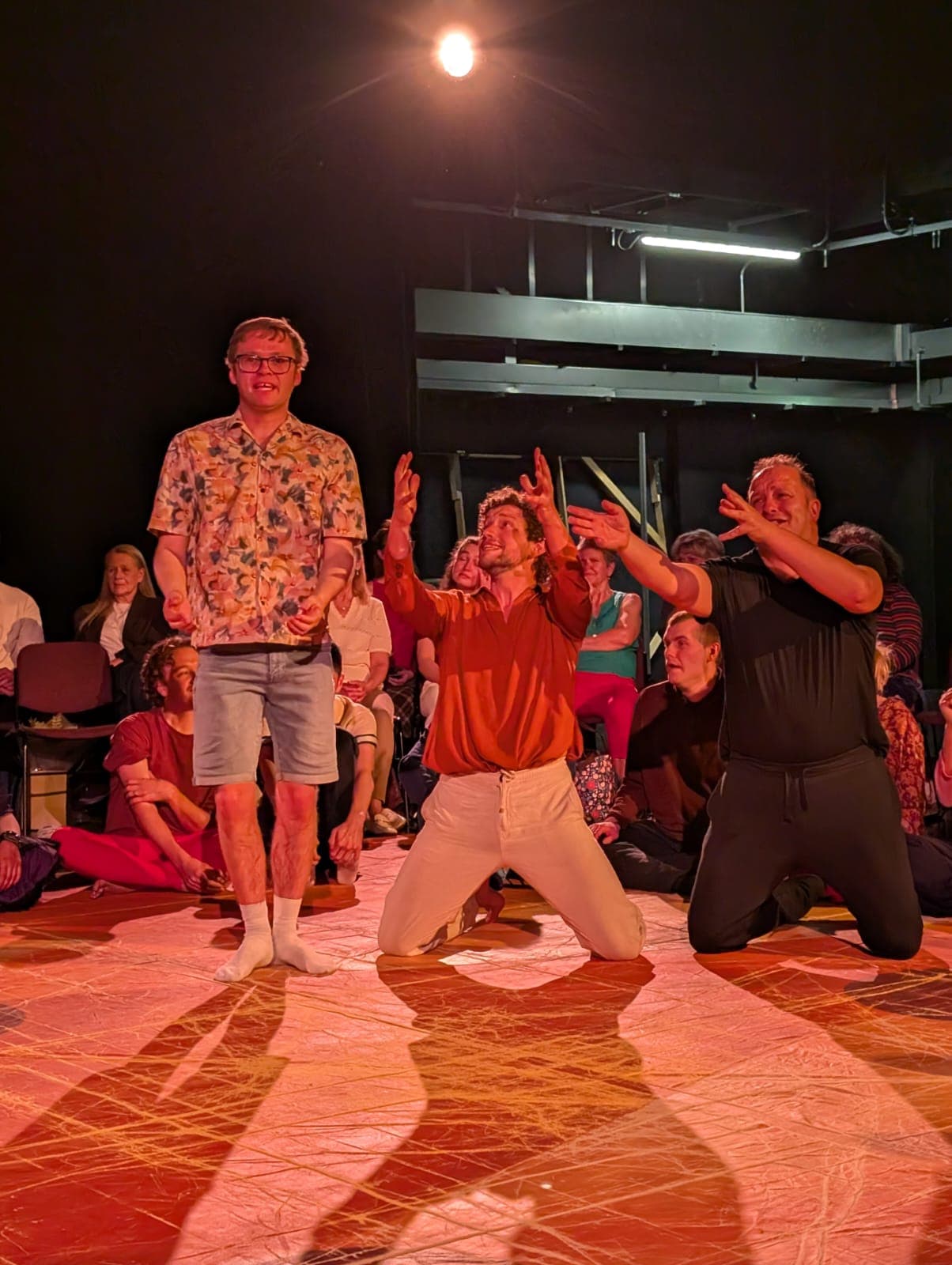
Flute Theatre is the most alive, courageously genuine and humane theatre I have ever seen. It takes a lot of courage to be honest and open, to be truly involved and caring, to do your absolute best and be 100 percent there for everyone in the theatre hall. I have known it since I first saw you in 2022. And yet you never cease to amaze me with going one step further each time. "King Lear" is probably the most demanding and intimidating play in the canon. Grief, confusion, and hopelessness are deeply human states that cannot be easily shared. Families caring for people with autism know it very well. You have managed to create a theatre space where despair is not so dark and heavy anymore because there are eyes that look at you with love and really see you, there are hands that hold you even when you are at your worst. It is a space where you can be mad, scared, lost and yet you still belong - simply because you are human and you deserve love. You show us a glimpse of the world I want to belong to.
Darya Lazarenko, New Bulgarian University
I have just seen King Lear - the version by Flute Theatre for autistic adults. Blown away. A remarkable and humbling and utterly joyous experience. What an extraordinary company doing extraordinary work. Life affirming. It is beyond a scandal that Flute has so little funding. Theatre where it really matters and makes a difference. Kelly Hunter you are a genius and a force of nature.
Annie Tyson
—Tim, Tom and Alain, King Lear 2026
Our autistic community of young adult co-creators have very limited functional speech and are mostly unable to hold two-way conversation. They always require at least 1:1 supervision. They only have their parents to speak for them.
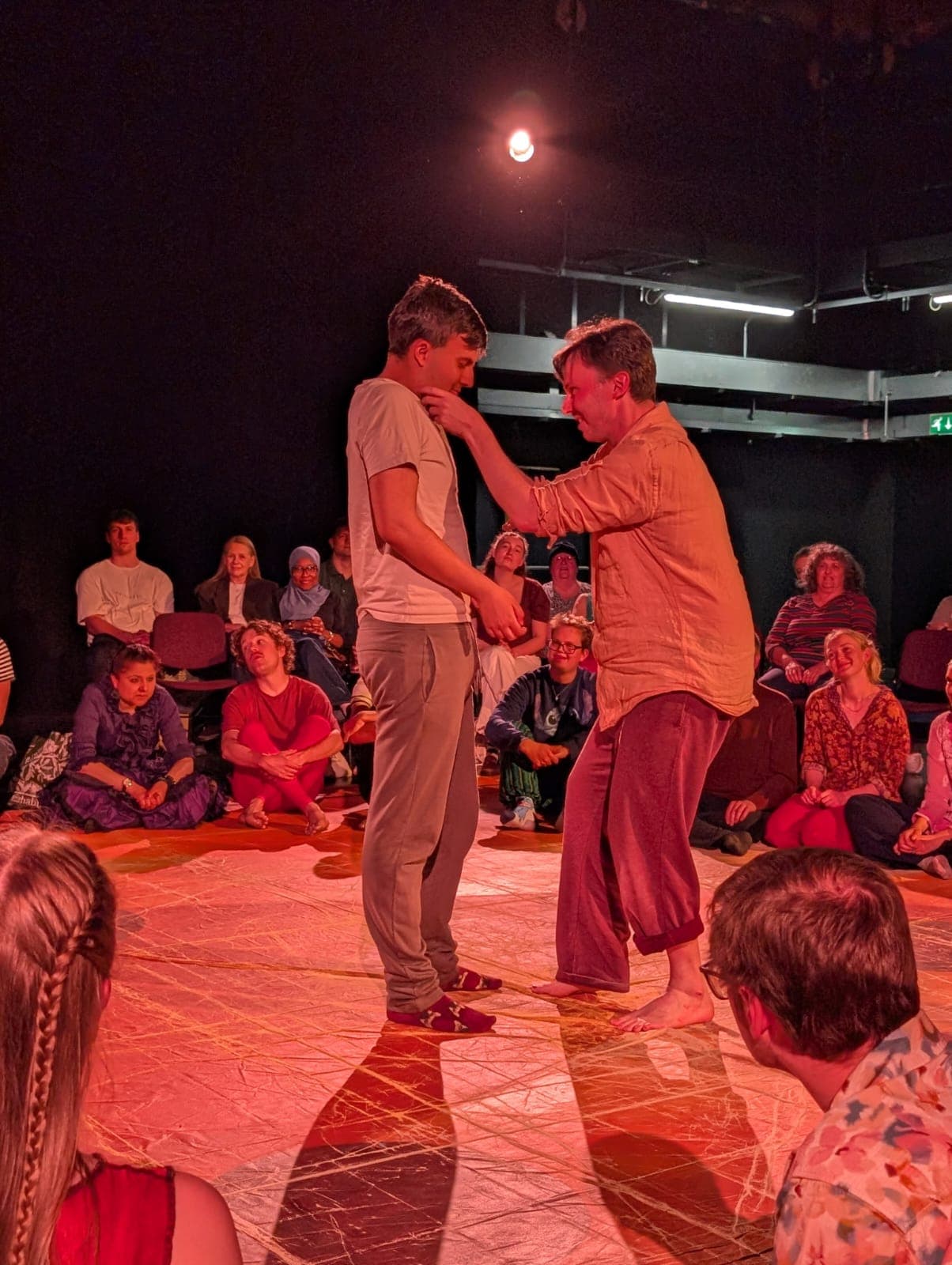
King Lear has taken the Flute experience to a completely new level. In part, that was to do with the much deeper process of co-creation that Kelly and the actors were able to undertake, working closely with autistic young people throughout. This not only enriched the way in which the work communicated, it also served to empower people whose creativity is rarely accessed, even though it is manifestly part of them and is all the more valuable because it comes from a specific and overlooked perspective. Perhaps even more importantly, it was to do with the way in which the intersection between this unique process and a great tragic text took the autistic young people into spaces of profound emotion and searing social critique. This work was not imposed upon them, but lived by them through their encounters with the material.
The autistic young participants, the actors and the audience (largely drawn from the autistic people’s families) became united in a different form of articulacy; one in which Lear’s injunction to “speak” is countered by Cordelia’s eloquently silent “nothing”, in which madness and fooling became the only sane responses to a world forged from absurd social conditions, in which the injunction to “change places” exposed the structural (rather than medical) basis of autistic exclusion, in which the compassion of a new awakening came to forge new human bonds through eye contact, touch, song and naming. It is some of the most important artistic work in the world today.
Michael Walling, Father of Hari and Amba
—Hari and Sam, King Lear 2026
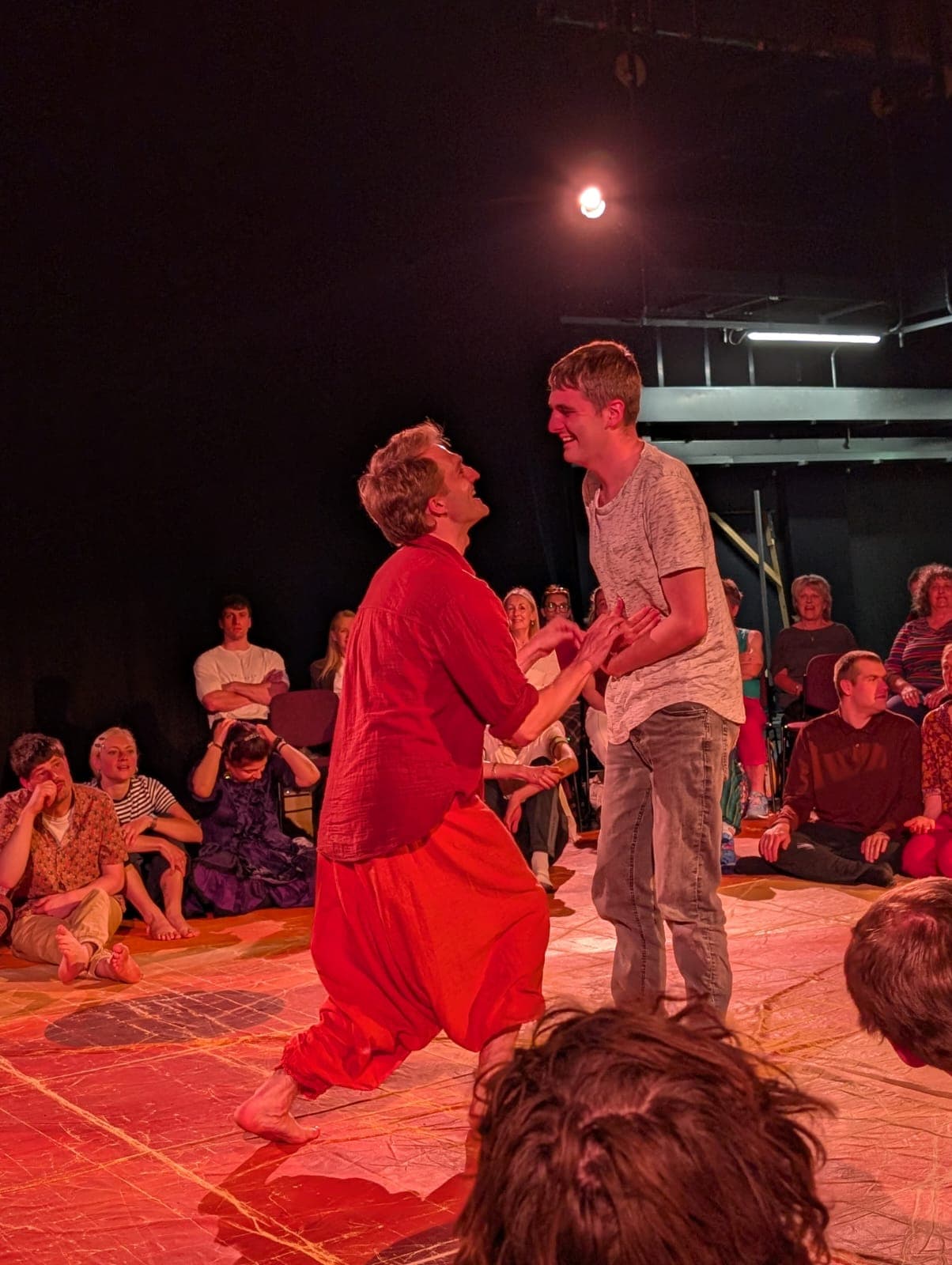
Gabriel has participated in Flute’s work for a decade and it has become a much-valued fixture of his life, but the Lear project took it to a new level. There was a depth and richness to this work, and a wisdom and maturity, that meant that he was fully at home in the play as never before. I was deeply moved by the experience and very much hope it can continue.
Robert Shaughnessy
—Gabriel and Josh, King Lear 2026
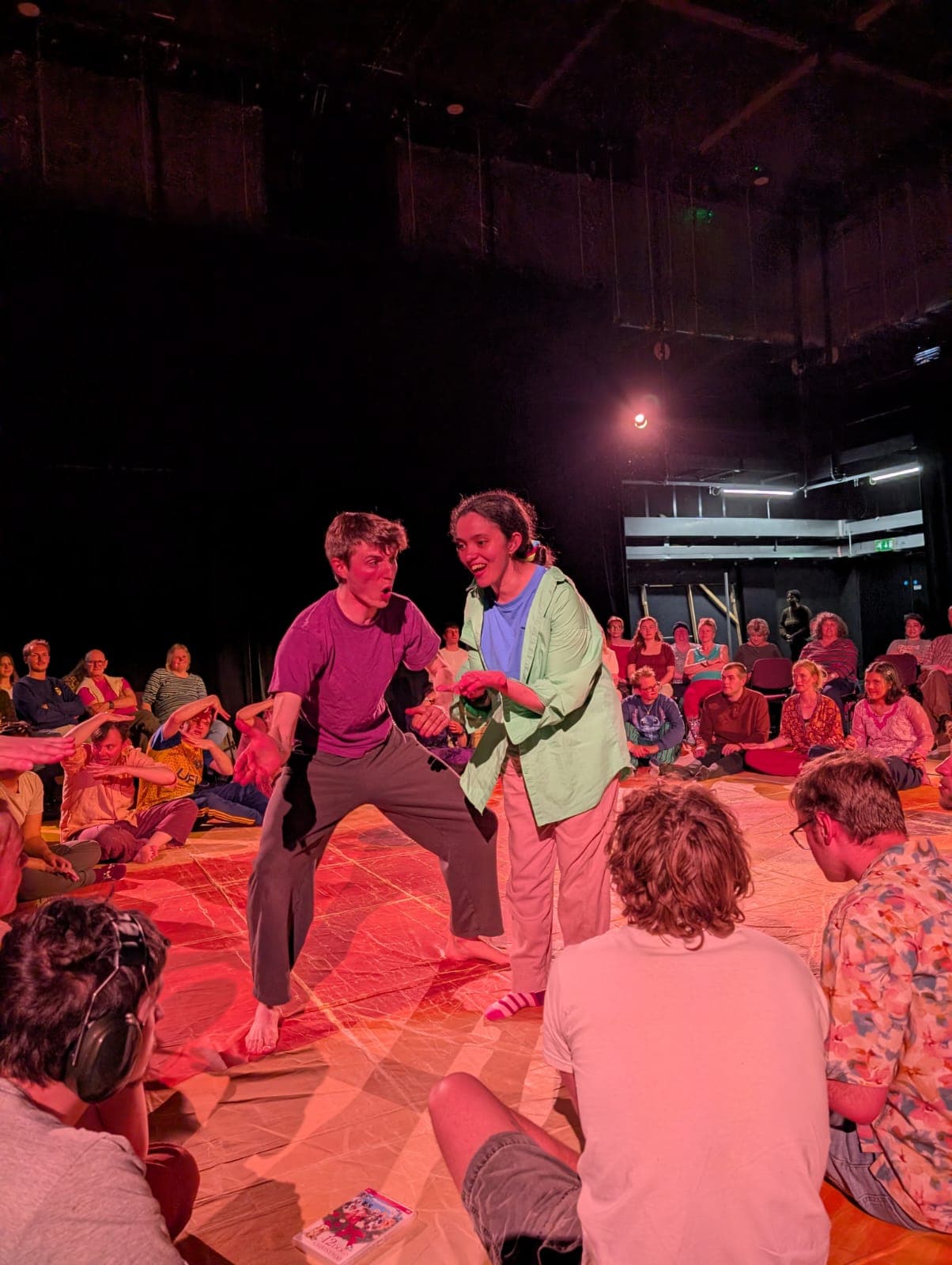
I would like to say thank you and your team very much for all your efforts through the three weeks. Of course Natalie would never miss a day. She loves it so much. It has made a significant difference in her life. She is so happy, cheerful and content.
Not only that but using more English words and better memory. She is telling everyone about her wonderful experience and her friends from the Flute. Natalie is looking forward to August 24th, and see you all again.
Salwa Ramadan
—Natalie and Filippo, King Lear 2026
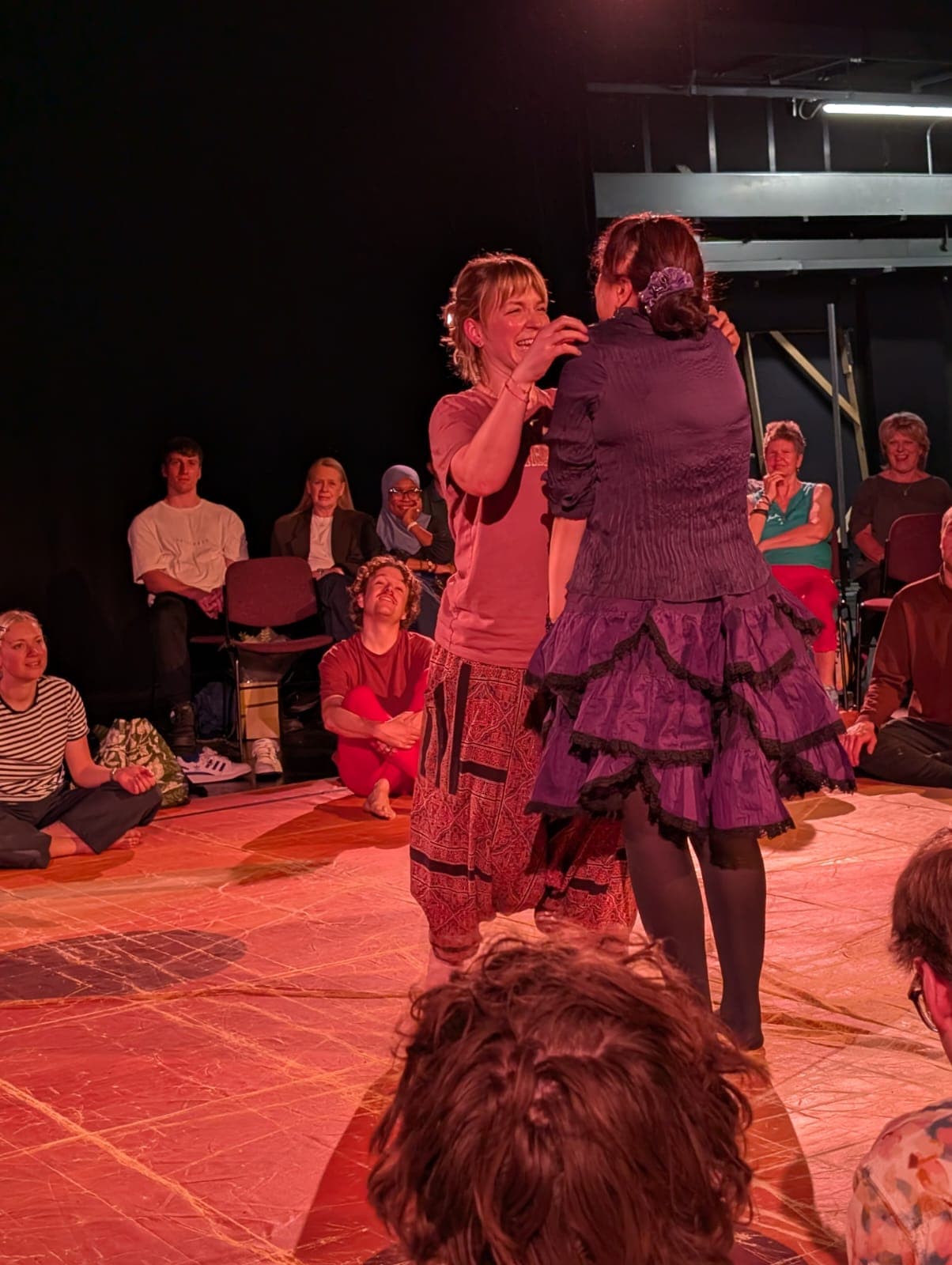
There is no theatre in the world quite like Flute. There are theatres that are radically inclusive. There are theatres that are artistically rigorous. There are virtually ZERO theatres that can do both. Kelly Hunter has done the impossible. She has created a theatre that can be both the greatest Shakespeare in the country not in spite of, but because of the beautiful autistic people it looks to serve.The development of King Lear brought on a new element to this work that I have never seen.
Ben Raanan, Artistic Director Phamaly Theatre
—Ranah and Tash, King Lear 2026
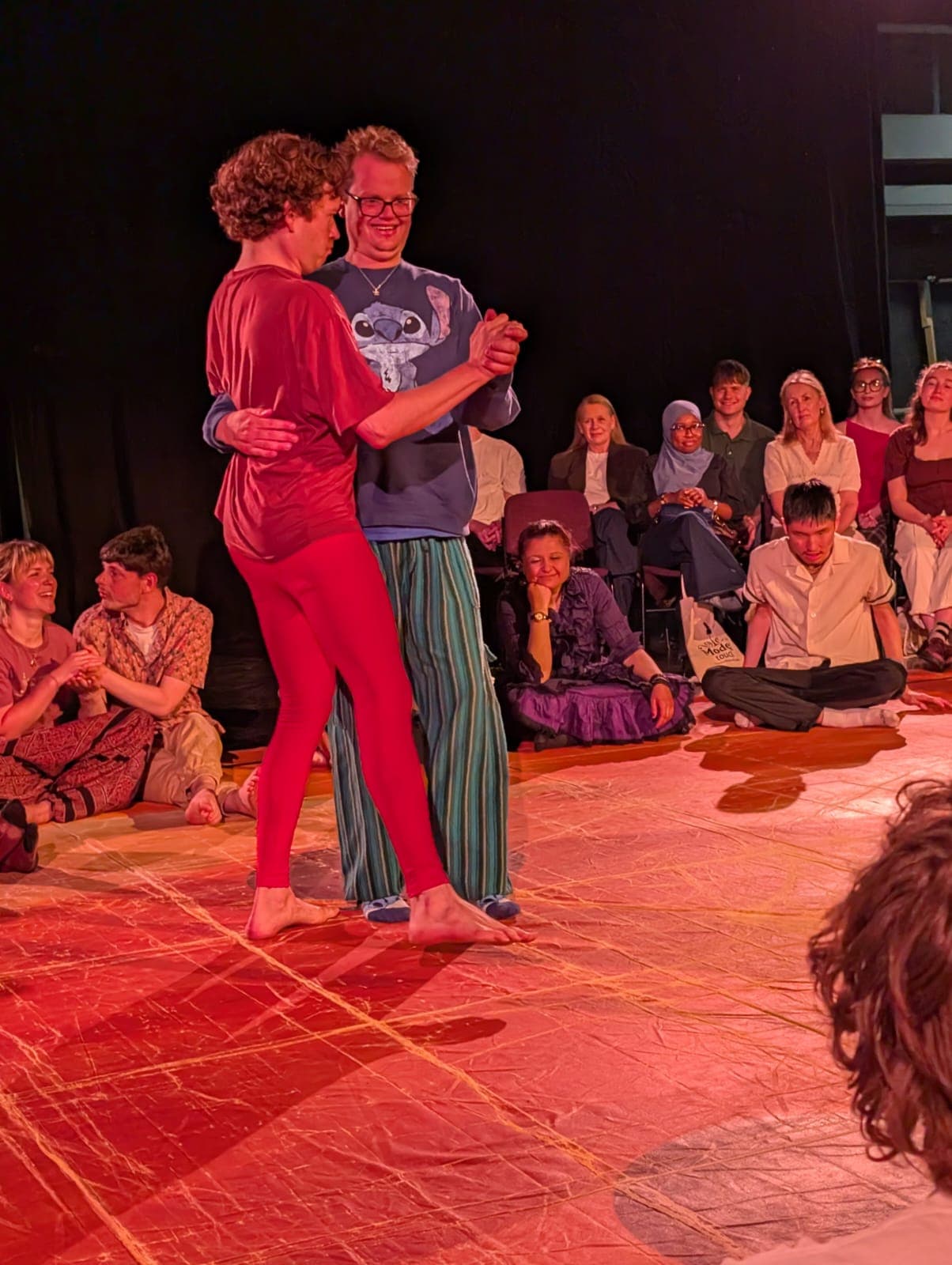
Taking part in the online broadcast of Flute's King Lear for people with autism awakens deep feelings of great art in the close format. So much warmth from the heart. For us in Sweden, Flute sends hope through these recognizable patterns of movements and rhythms, making all in the room alive. We so much enjoyed the full-fledged way the actors take on such a task, and use their profession with a sublime attitude towards both Shakespeare and each participant. It is as if they are constantly saying with their eyes, hearts and bodies: "Whatever happens, you are part of this, you are important and we love playing with you!" We are a small theater company across the sea in Gothenburg and have followed Kelly for several years now - and are learning the method - this gives us hope that it is worth it, the work that gives so much in return. We have experienced just that during these years, and it seems that you can trust the method no matter what people you meet around the world.
Kristina / Big Wind Theatre Company Gothenburg Sweden
—Greg and Jacob, King Lear 2026
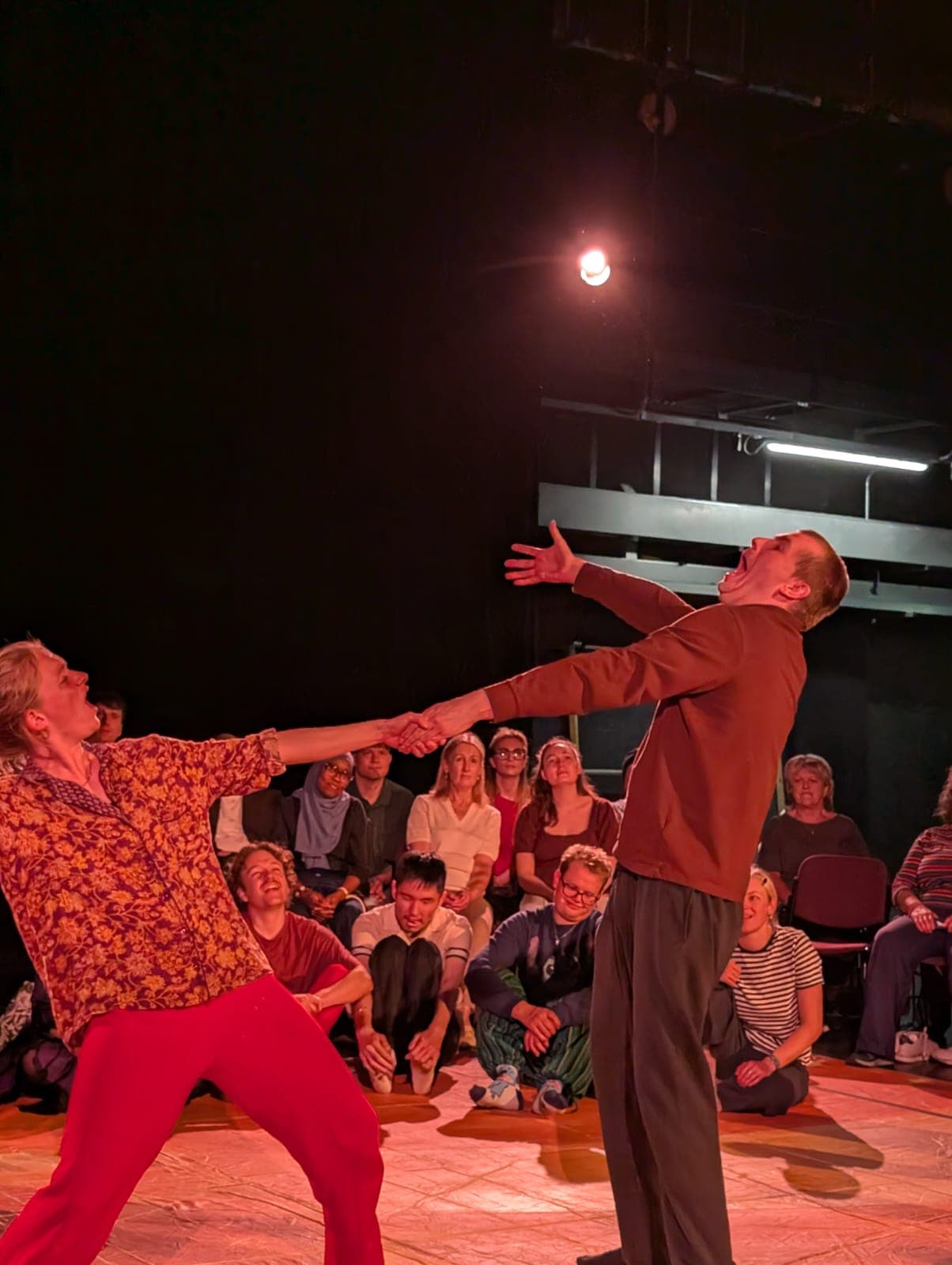
It was truly an honour to be able to watch the first ever showing of King Lear for autistic individuals. I’ve been associated with Flute Theatre since 2018 and what has always kept me coming back has been the amount of learning each experience gives the makers and how it finds itself back into the work. My own research had always limited the Hunter Heartbeat Method to fantastical plays of Shakespeare but watching King Lear made me realise it’s all about the believability that the actors bring to any character, fantastical or not.
Even though I was restricted to viewing it from a camera lens all the way from India, I was able to hear every song, see every move and vicariously enjoy the movements of all the individuals in the room. What stood out most for me was the care that was taken by each of the actors towards the participants to guide them through the new work. Honestly I can’t wait to bring the work back to India in the near future!
Ninad Samaddar, Artistic Director of The Urban Theatre Project, Kolkata India
—James and Millie, King Lear 2026
"You see how this world goes.
I see it feelingly."
King Lear Act 4 sc 6

"The most tender and complete production of King Lear that I (or Stratford-upon-Avon) have ever seen." - Audience member
In August 2026 we began our pioneering tour of King Lear with Autistic adults
—Hammersmith Social Club
